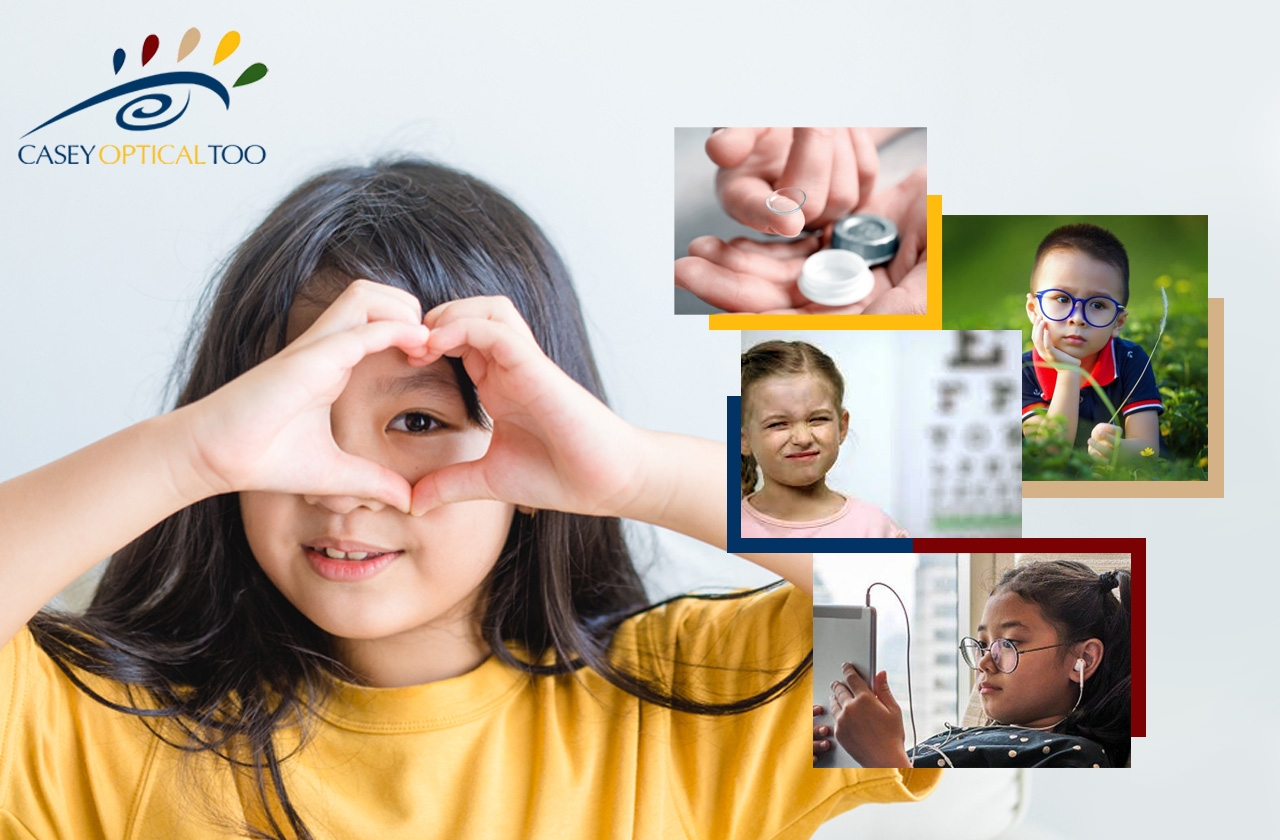
Distance vision becomes hazy due to the very common refractive defect known as myopia (nearsightedness). Myopia typically starts in childhood but can deteriorate year after year until it reaches maturity. Myopia in children can develop for various reasons, such as genetics, lifestyle, and visual habits.
Typically, contact lenses or prescription glasses can treat nearsightedness. However, these standard lenses do not stop the progression of myopia.
Myopia development cannot be stopped with conventional single-vision corrective lenses. Weak or inadequate lens prescriptions increase the likelihood of advancement even further.
The blurriness keeps getting worse as myopia progresses. High myopia (severe myopia) can result from it, especially if it is not treated in childhood. High myopia is problematic since it can result in blindness and other severe vision problems in adults.
Early detection of myopia in children is crucial. Myopia control techniques can stop the progression and prevent high myopia if it is identified early enough. And not all children will exhibit overt myopia symptoms. This is one reason why all children should have routine pediatric eye exams.
Eye growth and vision
Myopia results when a child's eyeball is too long from front to back. Additionally, it may appear if the cornea, the transparent window in front of the eye, is bent too sharply. When light rays enter your child's eye, they just barely miss the retina, the light-sensitive tissue at the back of the eye. This makes nearby objects visible and distant objects fuzzy.
In farsightedness, also known as hyperopia, distant objects are more distinct than close ones. Concentrating on everything, but especially on close-up items, requires greater effort. Since children's eyes haven't fully matured, some farsightedness is common throughout this age. However, because their eyes focus on their surroundings instinctively, most children do not experience fuzzy vision. Children typically lose their farsightedness as they age and may develop nearsightedness in its place.
Through adolescence, myopia typically gets worse until it starts to settle in the early 20s.
Myopia symptoms in children
Children, unfortunately, rarely report visual issues because they have no baseline for comparison and assume that everyone else sees the same way they do. You must watch for the following symptoms and risk factors because your child might not be aware that they have myopia, which is characterized most frequently by hazy vision.
Typical signs of childhood myopia include:
- Shutting one eye or squinting
- Moving close to or sitting close to items they are attempting to focus on, such as the TV
- Clumsiness
- a drop in performance in the classroom
- complaints of eye pain, headaches, or light sensitivity
What causes myopia in children?
Parents frequently worry about factors contributing to myopia and question if their children are at risk. In particular, parents who are nearsighted themselves can be worried about this.
There are several recognized risk factors for nearsightedness, but the specific cause is not entirely understood. One or more of the following conditions can put a kid at risk of myopia:
- Genetics
- External variables
- Visual routines
Genetics: A child is three times more likely to develop myopia if one parent does. The likelihood that a child will develop myopia is doubled if both parents are nearsighted.
As "modifiable" risk factors, environmental factors and visual habits are included. Contrary to heredity, these characteristics are easily changeable by making little changes to behavior and habits.
And they are currently getting a lot of attention. There is growing evidence from studies that these "healthier" habits can postpone the onset of myopia.
Environmental variables: There is compelling evidence linking the onset of myopia to inadequate outside time. Children should be encouraged to spend around two hours outside during daylight hours each day.
Visual practices: There is evidence that consistent close work can cause myopia. Any activity requiring close visual focus, such as reading and utilizing digital gadgets, is called "near work." Long-term close-up viewing of digital devices or books may raise the chance of developing myopia.
Parents should encourage children to rest their eyes when working close up frequently. The 20-20-20 rule is another name for this.
How to lower the risk of myopia in your children
Numerous studies suggest that increasing children's outdoor time can slow or stop the growth of myopia. Evidence suggests that spending time outside may be more influential than genetics and working nearby.
According to research, exposure to natural sunshine outdoors may impact eye development. The eye's axial length is connected to fuzzy distance vision more frequently than any other factor. Myopia develops when the length of the eye, measured from front to back, becomes excessive.
Studies have linked this growth to outside sunlight exposure (or a lack thereof). On average, children who spend more time outside typically grow their eyes shorter.
Children were not already nearsighted are protected from myopia risk by spending time outside. Additionally, it has been demonstrated to slow down a child's growth toward myopia.
It is also crucial to make sure your child has frequent eye checkups. The peak years of myopia advancement are typically in childhood, where it usually starts.
Strategies for preventing myopia are successful, but only when applied early enough. This is why it's so important to identify and treat myopia at an early stage. But remember that many children won't exhibit or complain of overt myopia symptoms.
Following this plan for eye exams is advised by vision experts for all kids:
- a first eye examination at age six
- age 3 to 5 for the following examination
- When entering first grade, the third exam
- Every year, there are school tests.
- Your child will probably require more frequent eye tests if they have increasing myopia.
Treatment for myopia in children
Although myopia cannot be fixed or reversed, it can be managed. The treatment aims to strengthen and stop your child's vision from deteriorating. Even if they still use glasses or contact lenses in the future, this is crucial for maintaining their eye health.
- Glasses: Myopia glasses can always be worn or only when your child needs them to view objects in the distance. It's crucial to pick frames that are appropriate for your child's age and activity and fit nicely. For instance, buying glasses with a strap may be beneficial if you have a young child so they are easier to put on. Alternatively, purchasing sports goggles will prevent your child's ordinary glasses from breaking if they participate in sports. You can determine what your youngster might require with the aid of an optometrist.
- Utilizing contacts: If your youngster prefers contact lenses, that is an alternative. They can be useful for other activities as well, particularly sports. Although there is no upper age limit for wearing contacts, your child should have good eye drop tolerance and appropriate hygiene habits. To avoid eye infections, lenses must be cleaned every day.
Even if your child wears contact lenses most of the time, it's crucial always have glasses as a backup. Your child's ophthalmologist or optometrist should be contacted immediately if they notice any pain or redness in their contact lens-wearing eye.
Conclusion
Myopia is a common vision condition that is increasing in prevalence in children. Genetics, age, time spent near work, lack of outdoor time, and ethnicity can increase the risk of myopia in children. Having your child undergo regular eye exams to detect myopia early and prevent further vision problems is important.
We invite you to experience personalized care and exceptional service at Casey Optical Too, where our dedicated team is committed to providing top-notch vision care for the Albuquerque community. Don’t wait any longer—schedule an appointment with our esteemed optometrists and embark on a journey to a more precise, healthier vision today.
Next PostPrevious PostCategories
Recent Posts
- Why Do Dry Eyes Get Worse During Summer?
- The Importance of Regular Eye Exams: More Than Just Clear Vision
- Lucyd Smart Frames: The Future of Smart Glasses?
- Dry Eye or Allergies? How the Trifecta Dry Eye Treatment Can Help
- Allergies and Dry Eye: Simple Guide to Causes, Symptoms, and Relief
Archive
- June 2026
- April 2026
- March 2026
- February 2026
- January 2026
- December 2025
- November 2025
- October 2025
- September 2025
- August 2025
- July 2025
- June 2025
- May 2025
- April 2025
- August 2024
- July 2024
- June 2024
- May 2024
- April 2024
- March 2024
- February 2024
- January 2024
- December 2023
- November 2023
- October 2023
- September 2023
- August 2023
- July 2023
- June 2023
- May 2023
- April 2023
- March 2023
- February 2023
- February 2021
- January 2021
- December 2020
